
In 1986, Katsuya Eguchi joined Nintendo as a designer at their headquarters in Kyoto, Japan. According to the National Video Game Museum (NVGM), Eguchi says, “When I moved there, I left my family and friends behind. In doing so, I realized that being close to them, being able to spend time with them, talk to them, play with them—was such a great, important thing. I wondered for a long time if there would be a way to recreate that feeling, and that was the impetus behind the original Animal Crossing.”
Eguchi collaborated with Hisashi Nogami on the development of Animal Crossing, originally titled “Dobutsu no Mori,” which translates to English as “Animal Forest.” In April of 2001, Dobutsu no Mori was released on the N64 (a home video console released by Nintendo in 1996). Later, an enhanced version was released on the GameCube and even translated into English for its 2002 USA release. However, players in Europe had to wait until 2004 to be able to play the game in their countries.
Dobutsu no Mori held the core focus of the game, which is living in a town with animal neighbors, and collecting items throughout gameplay to advance the town. Katsuya Eguchi wanted to focus on three core themes for the game, which are recognized by NVGM: “family, friendship, and community.”
In 2005, Animal Crossing: Wild World was released on the Nintendo DS. With Wild World came the biggest update: Nintendo Online gameplay. This allowed players to visit friends online using a DS-to-DS connection. They made the animal villagers more interactive, added new tools and features, and more creatures in fishing and bug-catching.
In 2008, Nintendo brought the series to the Wii with Animal Crossing: City Folk. This game expanded the series beyond a small-town game, into a commercialized economic experience. It was also the first Animal Crossing game compatible with Wii Speak, the Wii’s voice chat system, allowing players to talk to each other without needing to type in the chat. Despite critics at the time saying it was too similar to the previous games in the series, it ended up becoming a best-selling Wii game with 3.38 million copies sold worldwide.
Animal Crossing: New Leaf came with a massive change to the series’ gameplay; the player became the mayor of the town. This allowed for more freedom and control over the gameplay, because the player could now enact public works projects such as building bridges and museums. Also, the player was finally able to create laws for the town, given that they became the mayor.
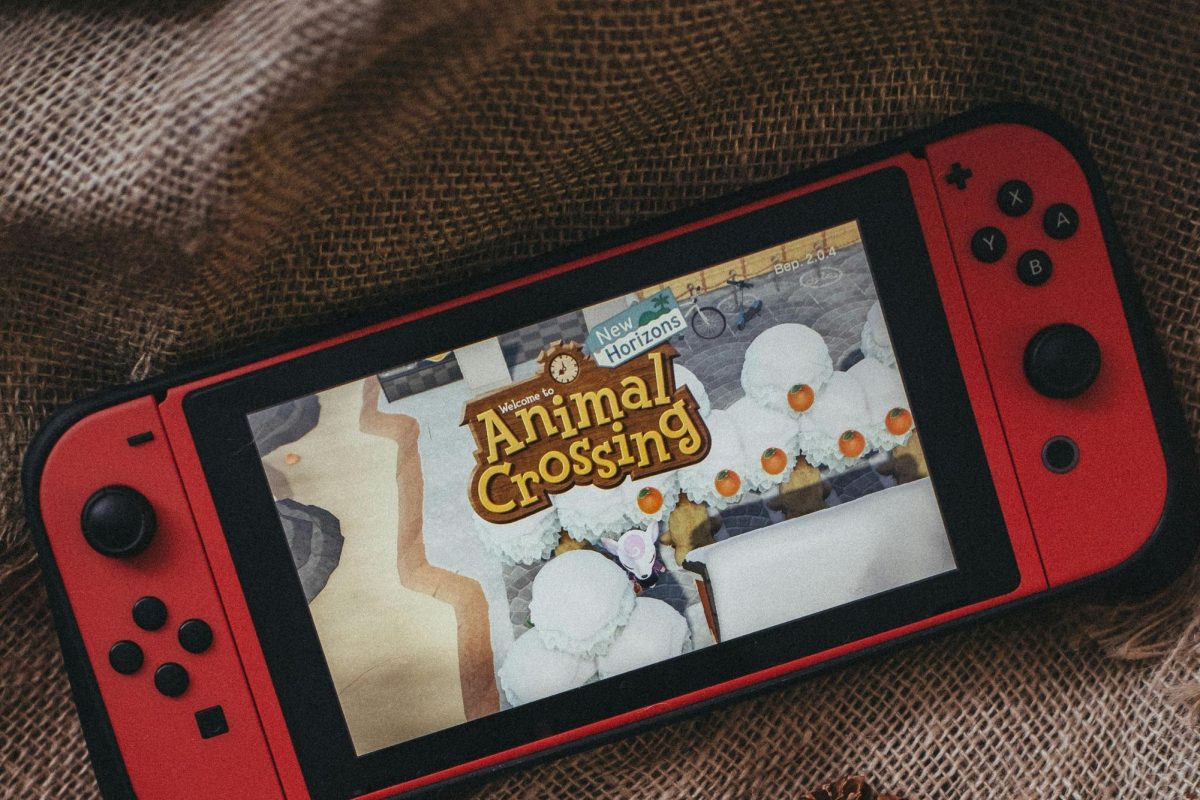
In 2020, nearly two decades after Dobutsu no Mori, Animal Crossing: New Horizons was released on the Nintendo Switch. Now, instead of moving into an established town and becoming mayor, the player begins on a deserted island through the management of Nook Inc. and their Deserted Island Getaway package. The addition of terraforming (editing of the terrain), crafting, and extensive customization gave players more creative freedom. Since it was released during COVID-19, New Horizons quickly became a global sensation, selling 49.32 million copies worldwide as of December 2025. The game offered players a sense of connection during a time of isolation. What started as Eguchi’s desire to recreate the feeling of closeness between loved ones evolved into a worldwide virtual community centered on his core values: family, friendship, and community.
Animal Crossing has grown from a quiet life-simulation game into a lasting cultural and community experience. The overwhelming success of New Horizons demonstrates how much people can value connection through shared interests, especially during uncertain times. Through seasonal events, online island visits, and player-hosted celebrations, the series has created a space where millions of people can find shared joy in the games, reflecting Eguchi’s goal from the very beginning.